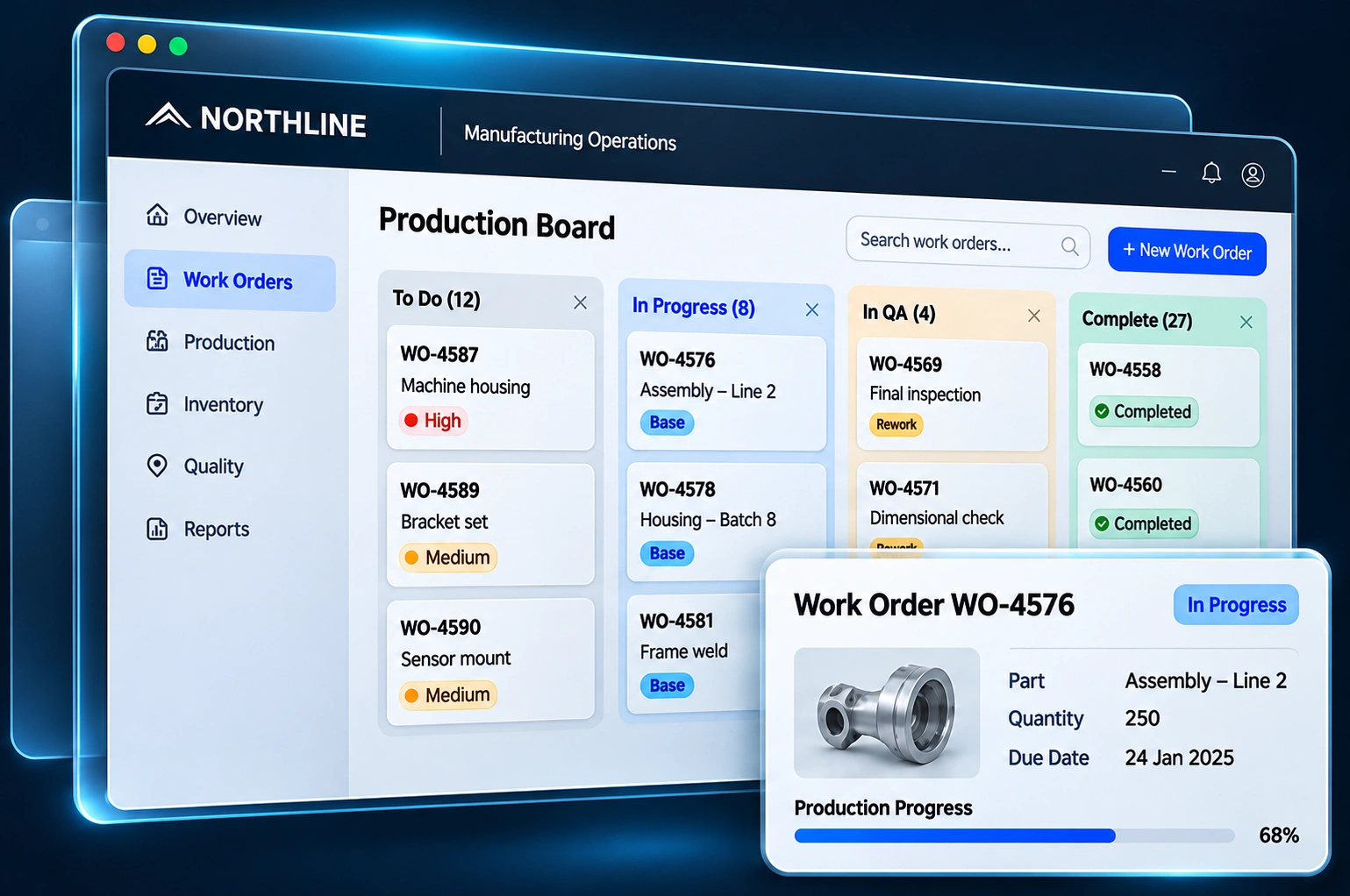
Custom operations software
Bring work orders, priorities, and production status into one view.

CUSTOM SOFTWARE DESIGN
Replace the awkward handoff, duplicate entry, or spreadsheet workaround with a focused application. We start with the people using it and the decisions it needs to support.
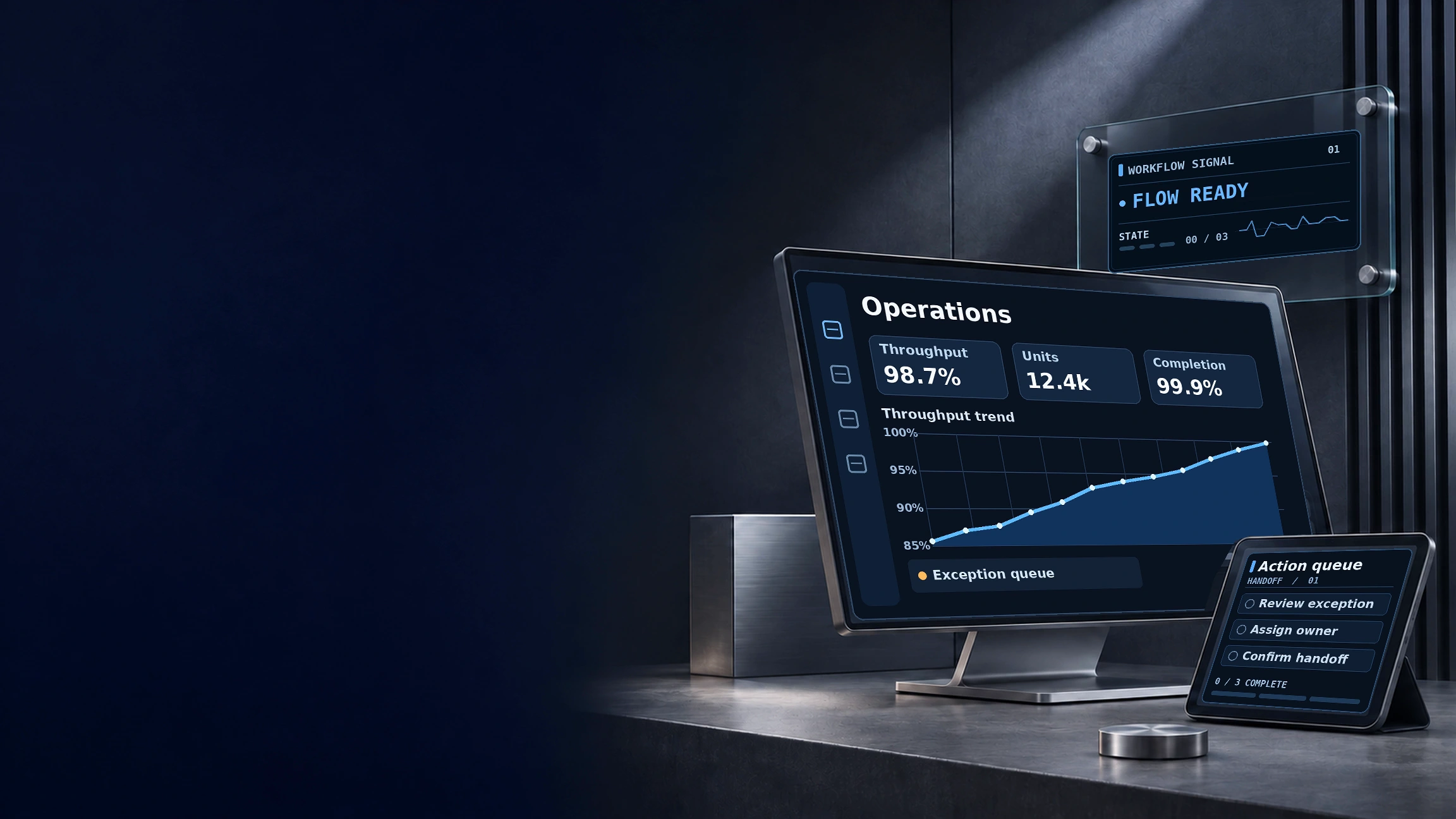
WHEN IT FITS
A critical handoff should not depend on copying the same information between spreadsheets, inboxes, and separate systems. Custom software is useful when the rules of your operation need a focused tool that existing products do not support well. We work through a representative task with your team before deciding what to build.
Discuss this service ↗↗Workflow discovery and requirements
↗Interface prototype with realistic sample data
↗Scoped application development
↗Data imports and integration assessment
↗Testing, documentation and handoff
CLEAR FROM THE START
We define the user roles, core tasks, data sources, business rules, and failure cases the first release must support. Existing-system access and integration feasibility are checked before they become delivery assumptions. Your proposal sets the deliverables, review points, acceptance checks, price, timing, ownership, and support responsibilities, with later features kept visible as a separate decision.
See how we engage ↗EXPERIENCE THE APPROACH
Explore fictional inventory review and approval workflows in the capability lab.
Open the capability lab ↗POSSIBILITIES, MADE VISIBLE
A few ways a focused project could take shape. Start with the outcome you need; we’ll define the right experience together.
Illustrative design concepts with fictional brands and sample data. These are examples of potential projects, not completed client work or measured results.
Bring work orders, priorities, and production status into one view.
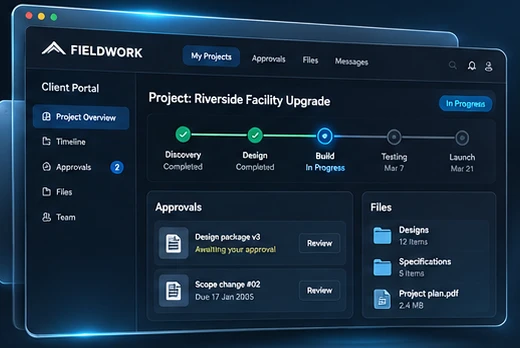
Give customers a place to review progress, approve work, and share files.
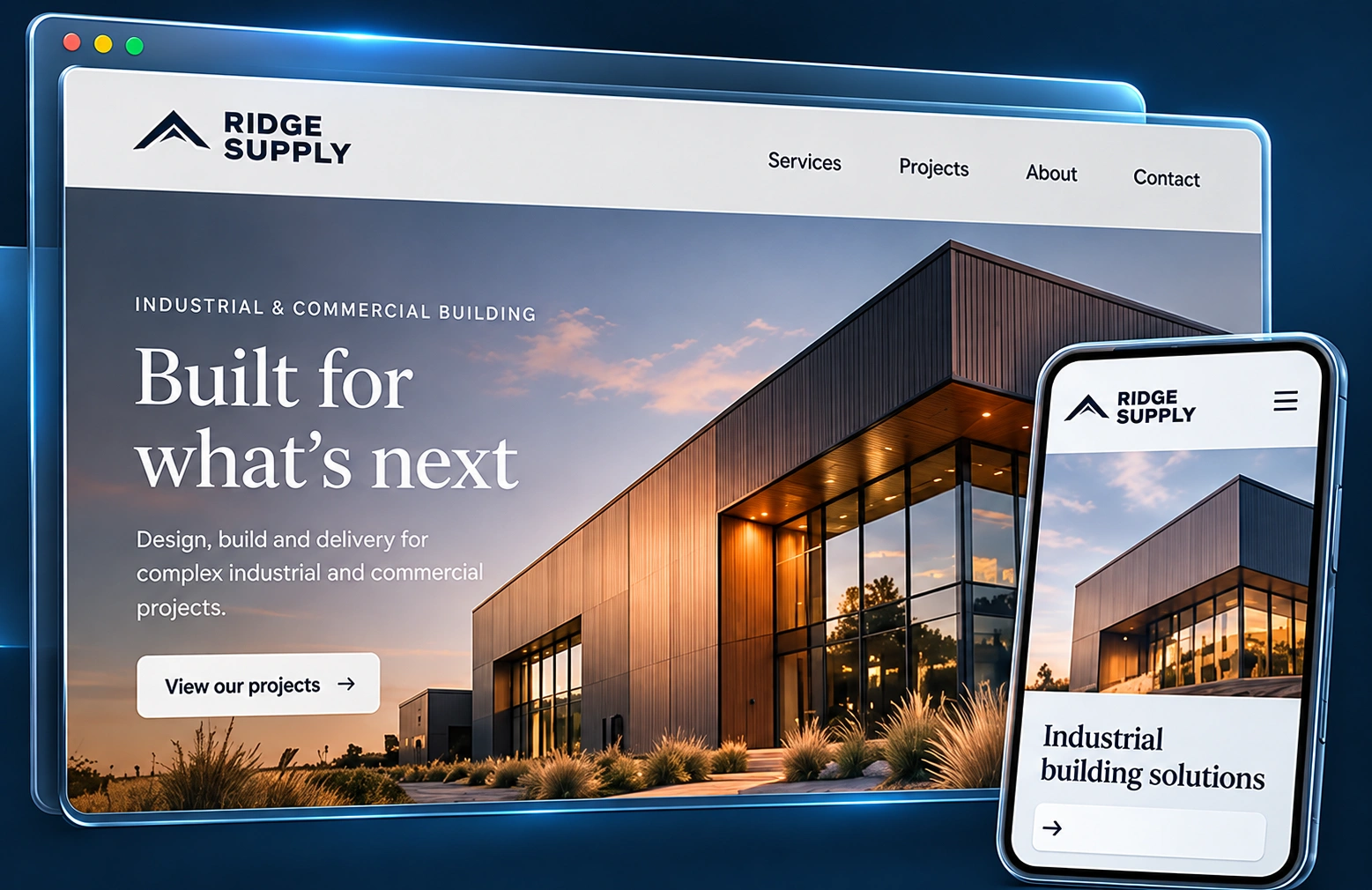
Present your expertise with a clear, responsive digital experience.
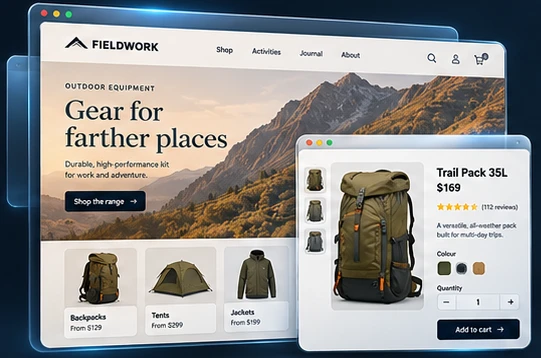
Connect product discovery with a considered purchasing experience.
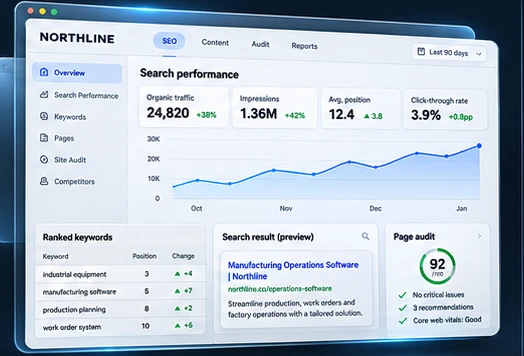
Explore search trends, page health, and opportunities for improvement.
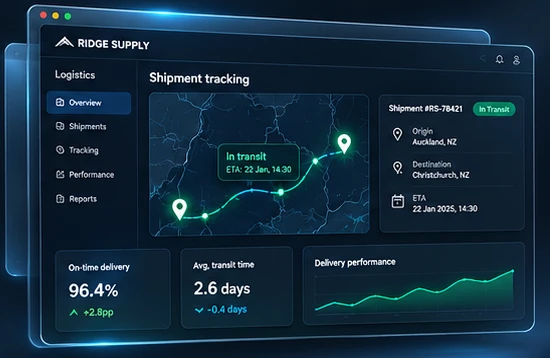
Turn shipment events and performance data into useful decisions.
THE WORK BEHIND THE RESULT
We look at who uses the process, where information comes from, which decisions require judgment, and what happens when something goes wrong. That understanding shapes the application: the screens people need, the rules behind them, and the information that must move between systems.
The first release should solve a complete, useful problem. That might mean a purchasing approval queue, a customer project portal, a production board, or an inventory exception workflow. We agree on the essential journey first, then separate launch requirements from later improvements so the project has a clear direction.
FROM REQUIREMENT TO DELIVERY
Map the current workflow, identify users and decision points, and work through representative examples. The output is a shared problem statement, a prioritized feature scope, and acceptance criteria that connect the build to the business need.
Translate the workflow into screens you can review before committing to the full build. Navigation, forms, tables, permissions, and error states receive attention alongside visual design, so the experience supports the people who will use it.
Build the agreed application and assess the systems it must work with. Imports, APIs, account access, testing, deployment, and documentation are scoped together; integration feasibility is confirmed against the actual systems and available access.
PRACTICAL ANSWERS
Start with the workflow and the cost of the current workaround. An existing product may be the better choice when it meets the essential requirements and your team can operate it comfortably. Custom development becomes more useful when important rules, handoffs, or user experiences cannot be supported well by the available tools. We can assess a focused application or connection before considering a larger replacement.
Yes, when future needs are considered in the initial design. We identify likely users, data volumes, integrations, and access requirements, then choose a first release with a manageable scope. Later phases can add capabilities after the core workflow has been tested. Expansion still needs planning and an agreed budget; a prototype is not automatically a production foundation.
THE WORK BEHIND THE RESULT
A mobile application can bring the same operating logic to people away from a desk. Field tasks, customer self-service, and on-the-floor information capture each have different device, connectivity, and usability needs. We can help define that journey and scope the app alongside its supporting systems.
LET’S MAKE WORK FLOW