
ILLUSTRATIVE PROJECT / TRACKING AND PERFORMANCE
See the shipment. Understand the exception.
A possible project direction, explained through the work it would support. Fictional branding and sample data; this is not a completed client engagement.
THE PEOPLE AND THE PROBLEM
Built around a real kind of friction.
Intended users
Logistics coordinators, customer service staff, and managers reviewing delivery exceptions.
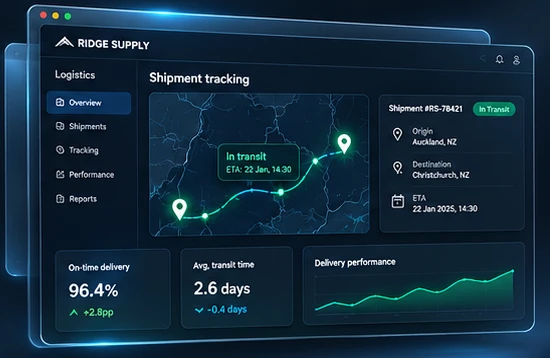
A route line on a map is useful only when the team understands where the information came from and what to do when plans change. This concept explores a shipment view that puts status, location context, and the next decision together.
The proposed approach
Make the shipment’s latest known state easy to find, then show the context needed to investigate an exception. Keep timing and source information visible so the display does not suggest a level of certainty the underlying data cannot support.
THE PROPOSED JOURNEY
How the workflow could come together.
- 01
Review shipment status
Find the current recorded state and the latest available update.
- 02
Investigate the exception
Review route context, destination, and any change requiring follow-up.
- 03
Coordinate the response
Record a next action or communicate an update using the agreed operating process.
VALIDATE BEFORE BUILDING
The questions behind the screens.
A polished concept is a way to test direction. These questions help turn the idea into a responsible project scope.
- Which carrier, transport system, or device supplies status updates?
- How are stale information, missing events, and revised estimates shown?
- Who can see shipment and location information?
- Which exceptions need an action, notification, or customer update?
A USEFUL FIRST ENGAGEMENT
Make the idea reviewable.
Exception workflow, tracking prototype, data-source assessment, metric definitions, and a first-release scope.